

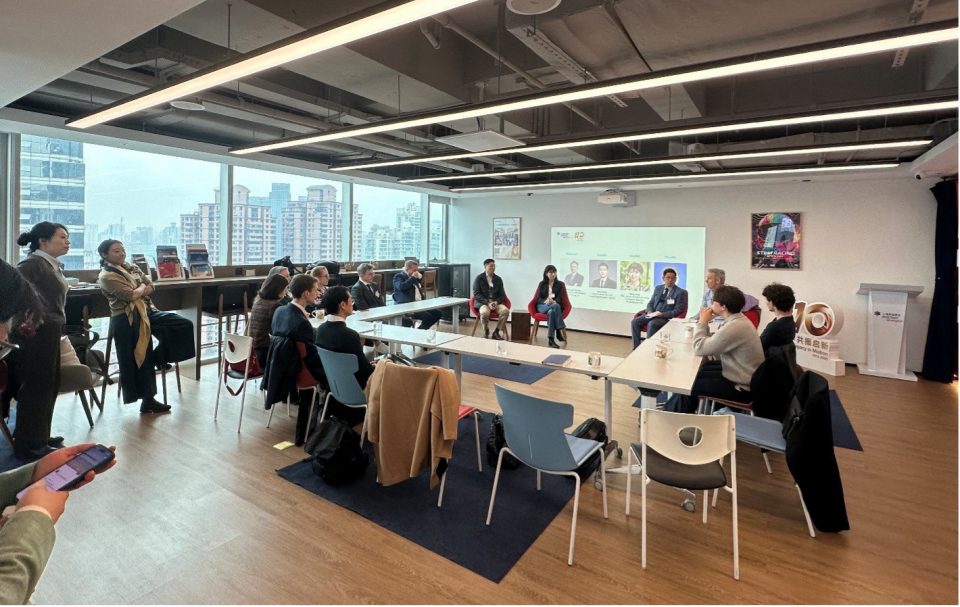
On 24 March 2026, BritCham Shanghai’s Advanced Engineering, Manufacturing & Life Sciences (AEM&L) Committee hosted a panel discussion titled “From China to Global: Partnering Strategies for the Next Wave of Biotech Innovation.” The session brought together industry experts to explore China’s evolving role in the global biotech ecosystem, covering cross-border partnerships, regulatory developments, intellectual property, and future trends.
The discussion was moderated by Maxwell J Kirkby, CEO of Huang & Kirkby Medical Consulting Co and Vice Chair of AEM&L Committee, who guided the conversation through five key questions:
The panel featured:
A Maturing Innovation Hub
The panel opened with a discussion on the structural shifts that have made China’s biotech sector increasingly attractive to global pharmaceutical companies. Experts observed that multinational corporations are now actively seeking assets from China, a marked shift from the past when they primarily utilised China to aid global recruitment in clinical programs.
Deal structures have matured considerably, with transactions now featuring well-defined upfront and milestone payments, along with clear financial alignment.
The moderator emphasised that the current momentum is not a short-term trend but the result of 20 to 25 years of capability building. As one panellist noted, China has evolved from a manufacturing base into a genuine source of innovation, and this transformation is sustainable.
Navigating the Regulatory Landscape
A significant portion of the discussion focused on the rapidly evolving regulatory environment in China. Recent changes shaping the industry include:
Decree No. 828 (effective May 15, 2026): Accelerates access to innovative drugs and aligns with international practices, including market exclusivity and accelerated approval pathways.
Regulations on the Administration of Clinical Study and Clinical Translation and Application of New Biomedical Technologies (effective May 1, 2026): Establishes China’s first comprehensive framework for gene editing, cell therapy, and stem cells, shifting approvals to a filing-based process.
Consolidated Regulatory Framework (2026): Unifies rules across R&D, registration, manufacturing, and post-market surveillance.
It was noted that China’s regulatory evolution has been so effective that it is now being looked to as a model by other jurisdictions, including the United States where in a recent NEJM article senior FDAers recognised they had been slow to update regulations in line with advances in drug discovery and development resulting in an overburdening of regulation on innovators.
IP and Cross-Border Considerations
The discussion also addressed the critical importance of robust intellectual property protection in cross-border collaborations. Key recommendations included:
Plan early. IP strategies should be developed before entering the Chinese market, given the “first-to-file” principle.
Define IP clearly. Agreements must distinguish between background IP (existing assets) and foreground IP (jointly developed assets), specifying ownership, usage rights, and territorial scope.
Address future contingencies. Detailed provisions should cover dispute resolution, governing law, and arbitration frameworks.
Looking Ahead: Trends for the Next Five Years
When asked to forecast the future of China’s biotech sector, panellists shared a cautiously optimistic outlook. The trend of out-licensing early-stage assets to global pharma is expected to continue. China is also likely to see the emergence of biotech companies that become leader in specific areas of innovation however, we may still stay tuned for Chinese companies to become truly global players.
The growing role of patient capital was also highlighted. State-backed initiatives such as the Shanghai State-owned Leading Private Equity Fund are designed to provide long-term investment to life sciences ventures—critical for deep-tech innovation where returns take time.
Despite geopolitical challenges, Europe—and the UK in particular—remains a promising partner for Chinese biotech, with opportunities for deeper collaboration in research, licensing, and commercialisation.
Business Models and Funding
During the Q&A session, the discussion turned to the motivations behind current partnering trends. For Chinese biotech, the primary drivers include securing funding, gaining validation from global partners, accessing expertise in later-stage development, and building sustainable business models. For multinational corporations, partnerships offer access to novel assets, pipeline expansion, and deeper integration into China’s life sciences ecosystem.
On funding, it was observed that while state-backed funds play a significant role, private capital returns quickly when the market signals opportunity.
Conclusion
The panel concluded with a shared sense of optimism. China is no longer just a market for global pharma; it is becoming a source of innovation and a strategic partner in the global life sciences ecosystem. BritCham Shanghai’s AEM&L Committee looks forward to continuing the conversation and facilitating the connections that will drive the next wave of biotech innovation.