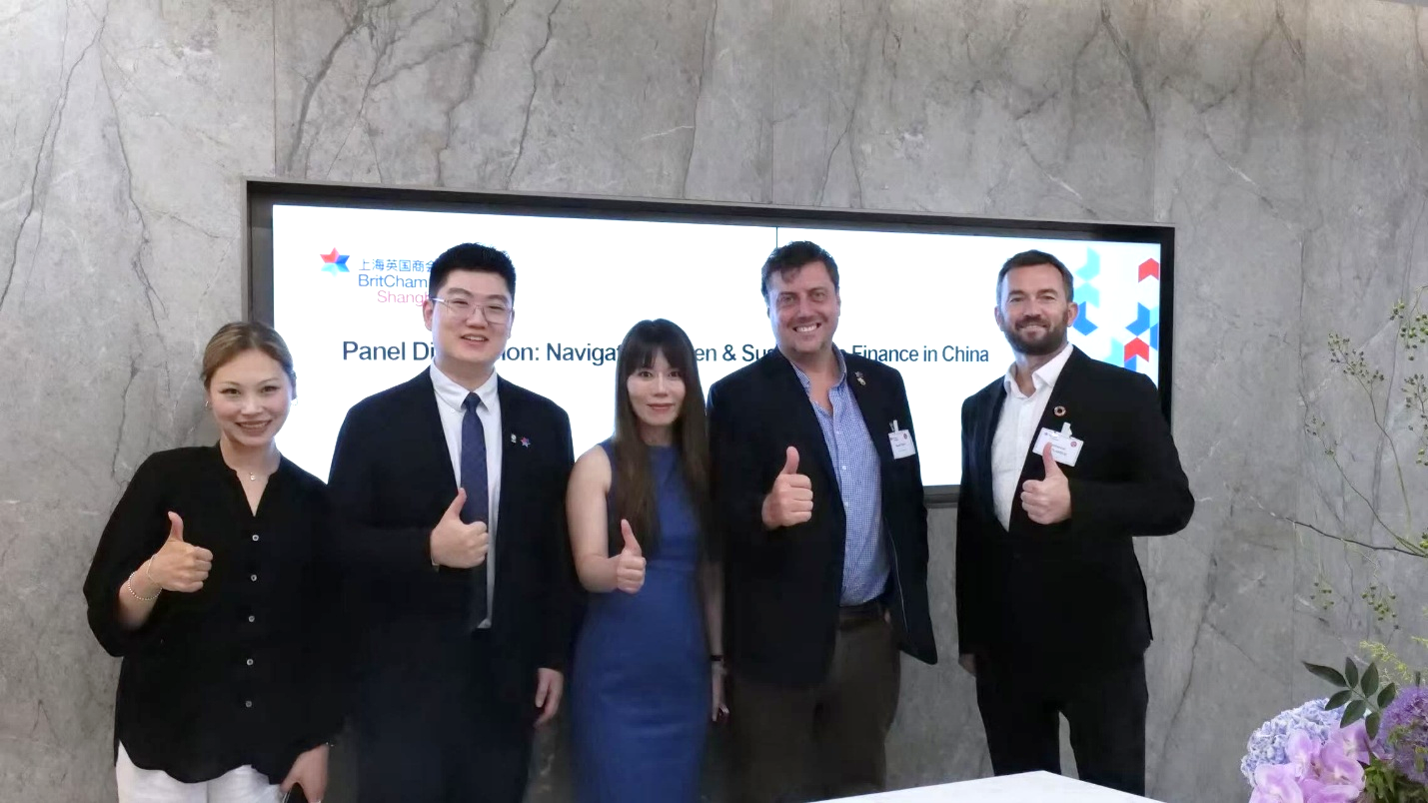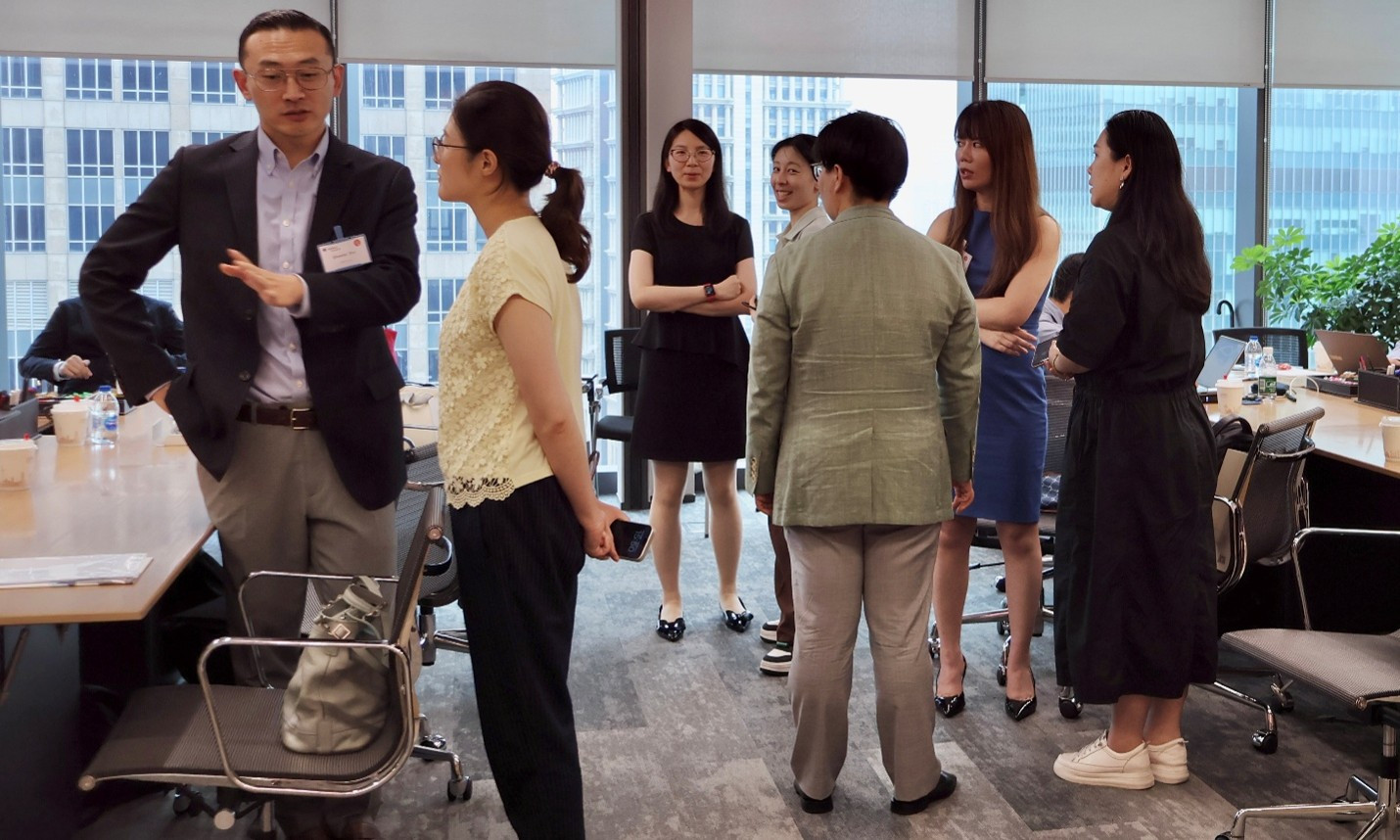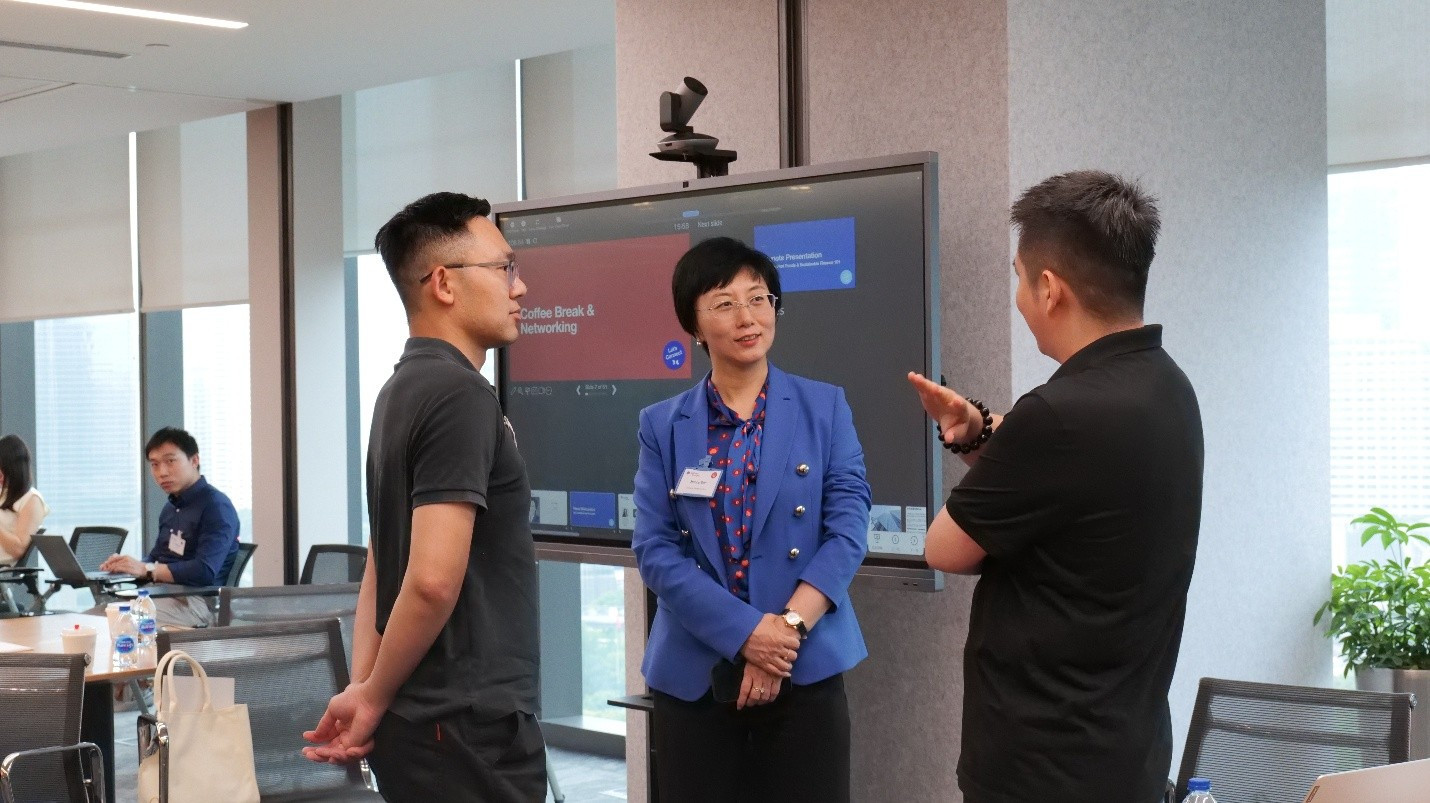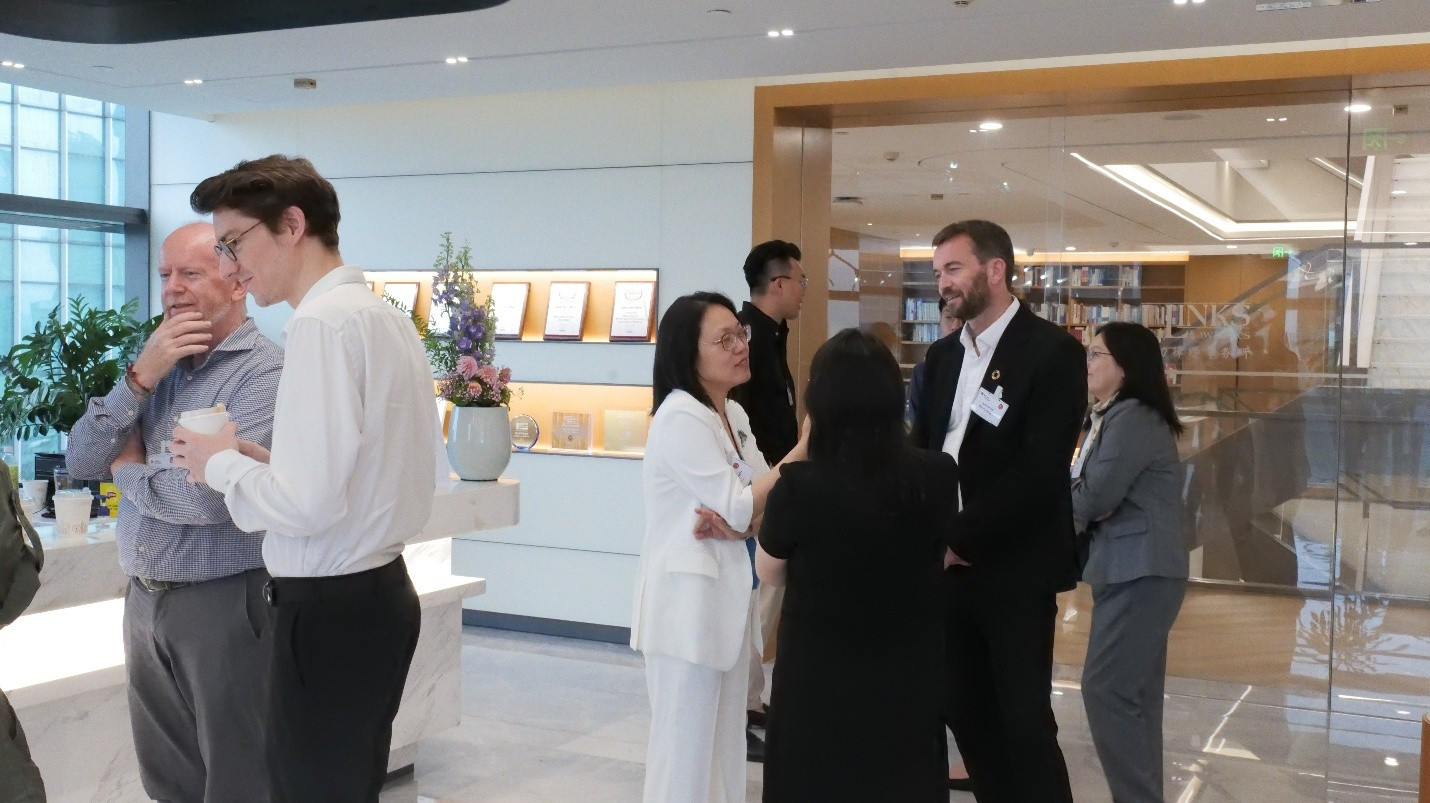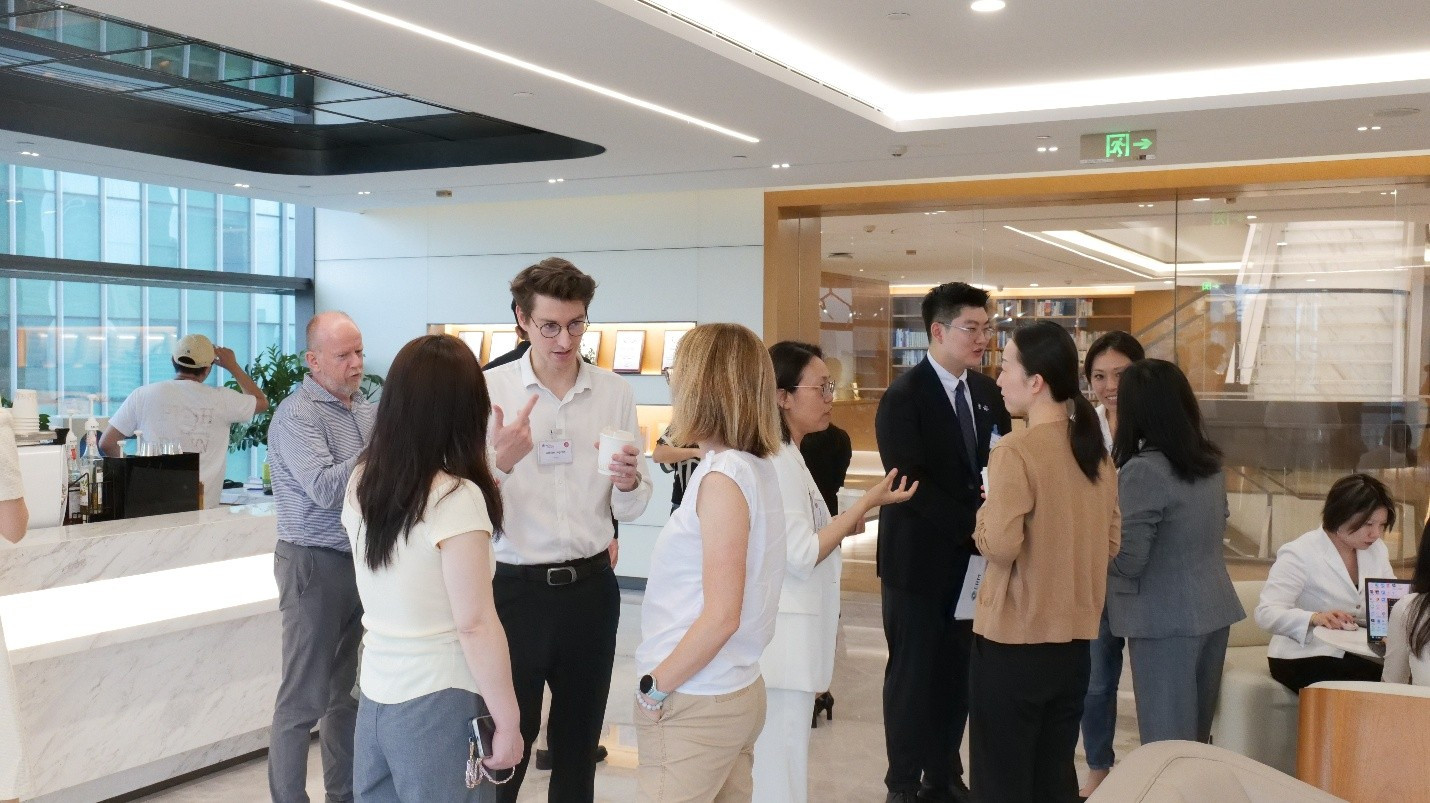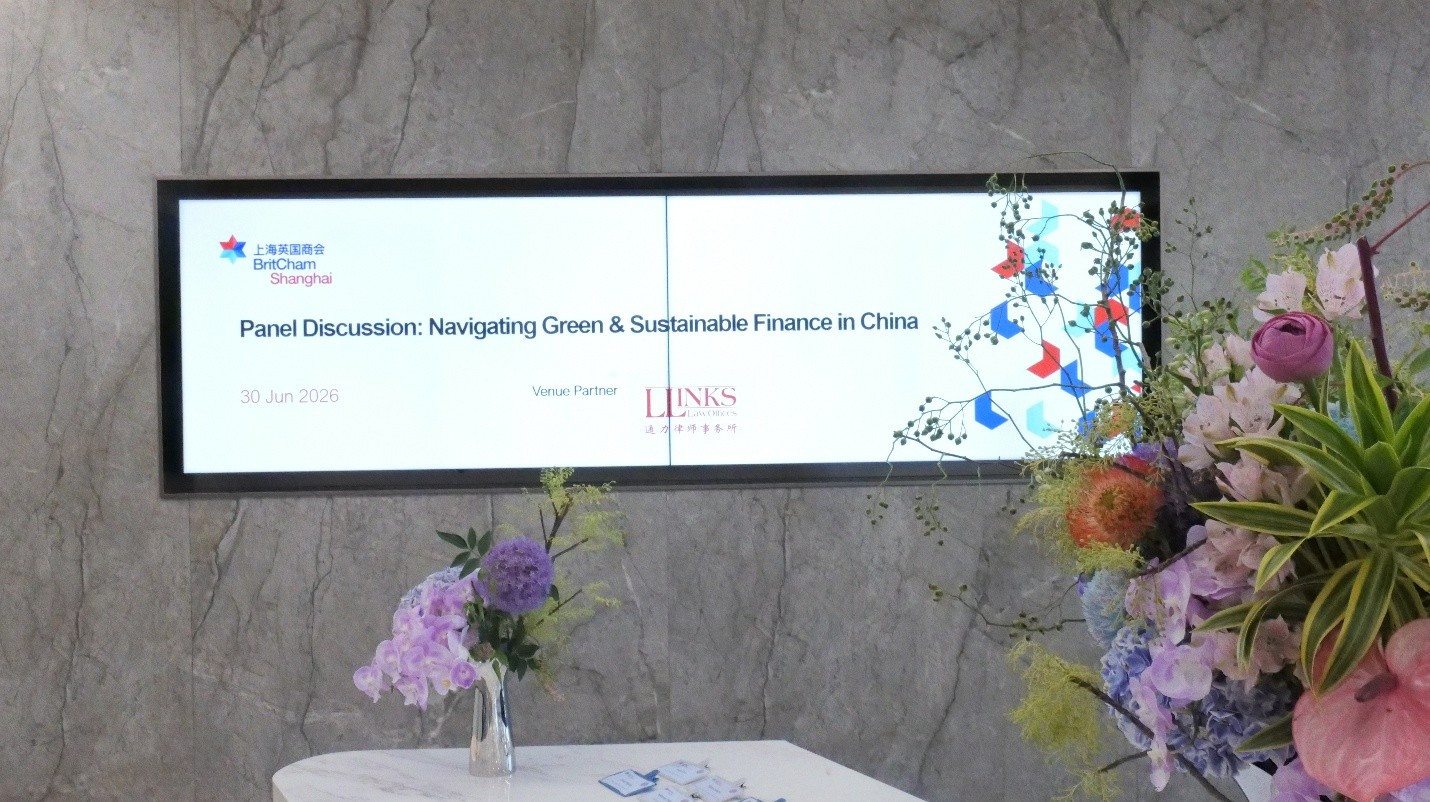


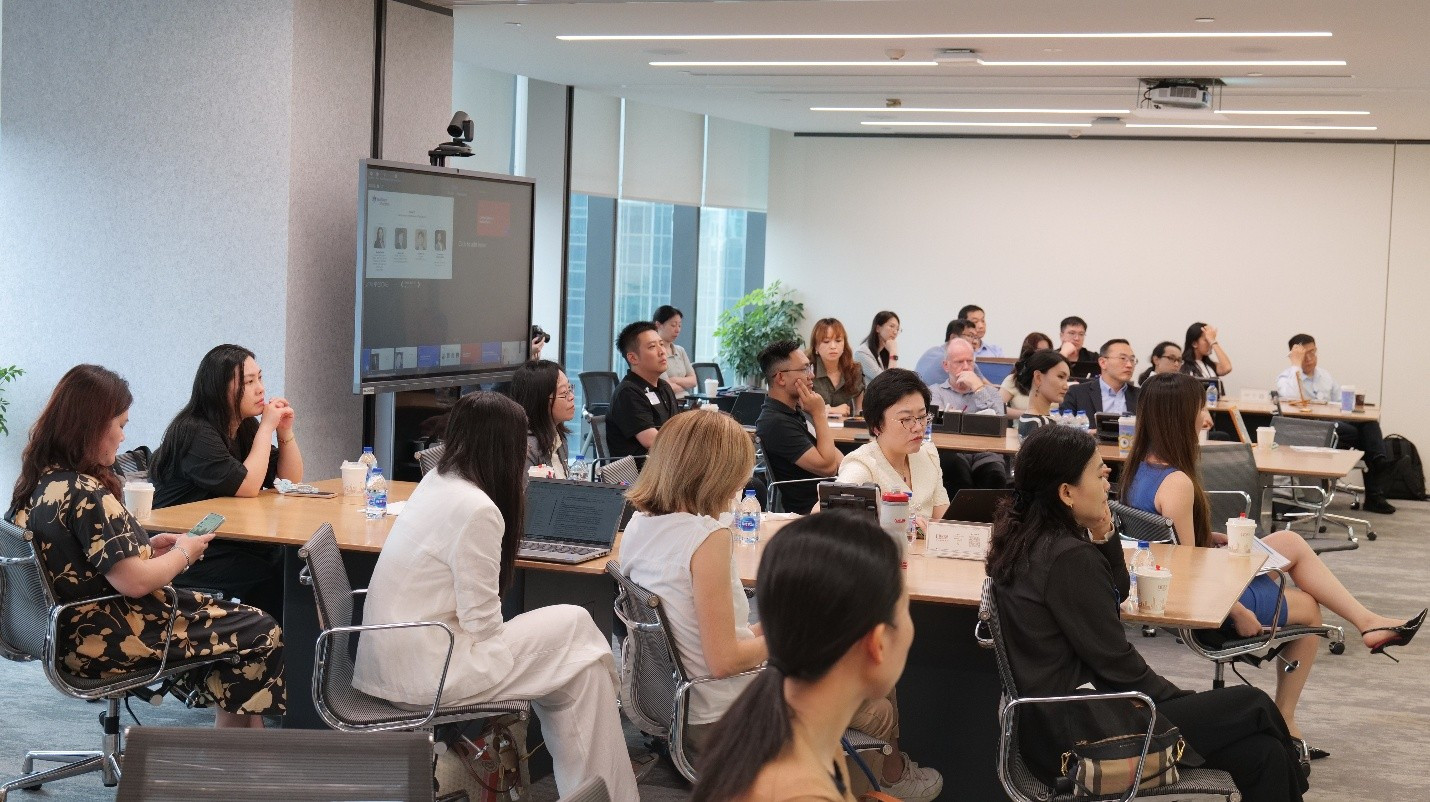
On 30 June 2026, the BritCham Shanghai Sustainability Committee hosted a panel discussion event titled “Navigating Green & Sustainable Finance in China” at Llinks Law Offices.
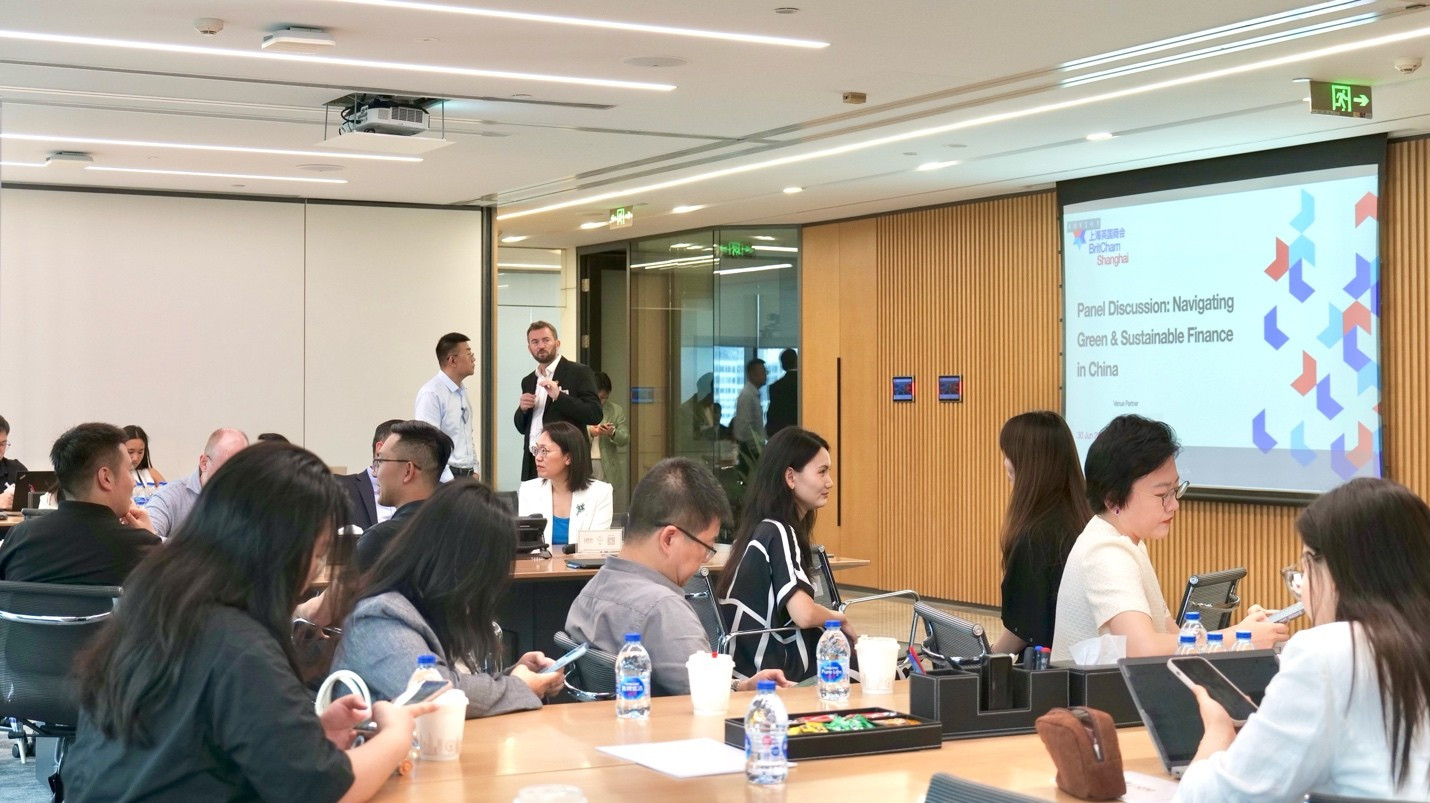
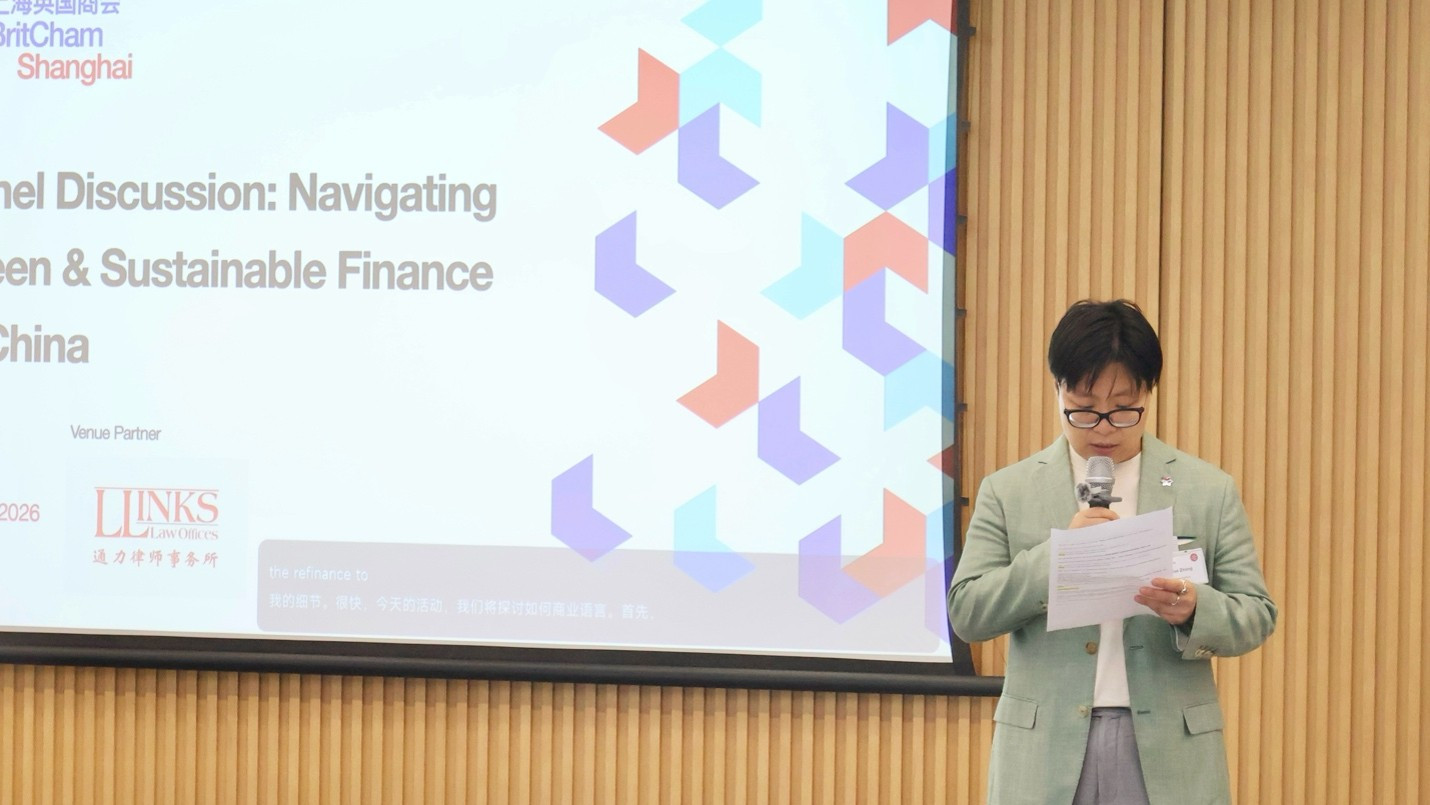
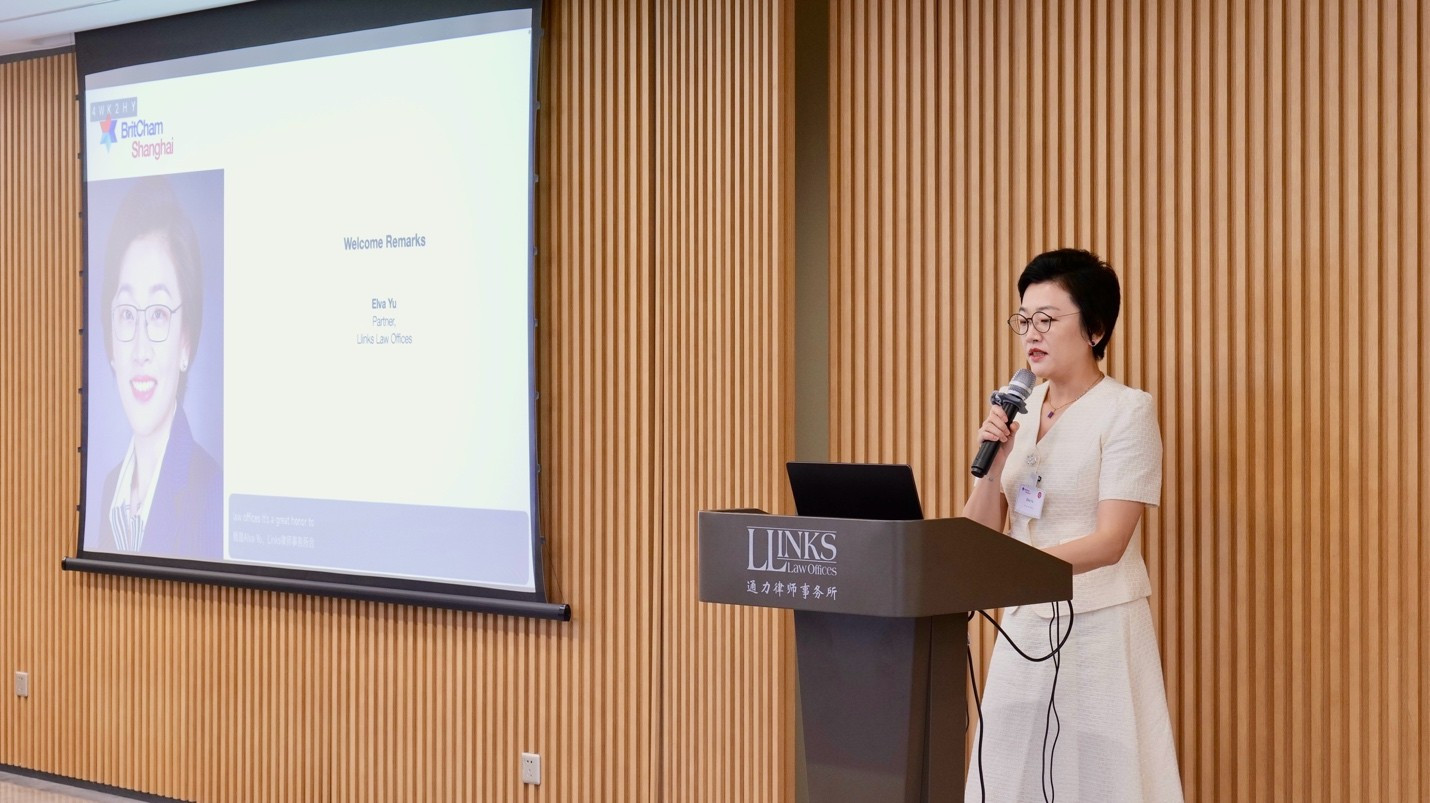
The event began with opening remarks from Eloise Zhang, Committee and Advocacy Manager at BritCham Shanghai, followed by Elva Yu, Partner at Llinks Law Offices, who delivered a welcome speech on behalf of the firm.
In Elva’s remarks, she highlighted the increasing pressure on businesses in China to enhance their sustainability performance while remaining competitive in a rapidly evolving global market. She emphasised that sustainability has become a core business strategy rather than purely an environmental concern, driven by stricter regulations, shifting market expectations, and post-pandemic transformation. The session set the context for the event by outlining how green finance tools, governance frameworks, and certification mechanisms can support companies in accelerating sustainable growth and advancing China’s broader sustainability ambitions.
The whole event was hosted by Carol Zhang, APAC Sustainability Leader at Edrington and Chair of the BritCham Shanghai Sustainability Committee.

The first panel discussion moderated by Emmanuel focused on how businesses can navigate China’s rapidly evolving green finance landscape while balancing regulatory compliance, sustainability goals, and commercial competitiveness.
The dialogue moved beyond basic compliance to examine how the state’s financial architecture—including central re-lending tools, localized tax levers, and circular economy incentives—can be dynamically leveraged by enterprises. Panellists explored the structural variations across regional policies, emphasizing that successful green initiatives depend on shifting corporate mindsets from short-term cost control to systemic long-term value. Rather than viewing green policies as rigid mandates, the session highlighted how integrating multi-authority incentives and robust data verification creates unique regional competitive advantages for both domestic and foreign-invested enterprises (FIEs).
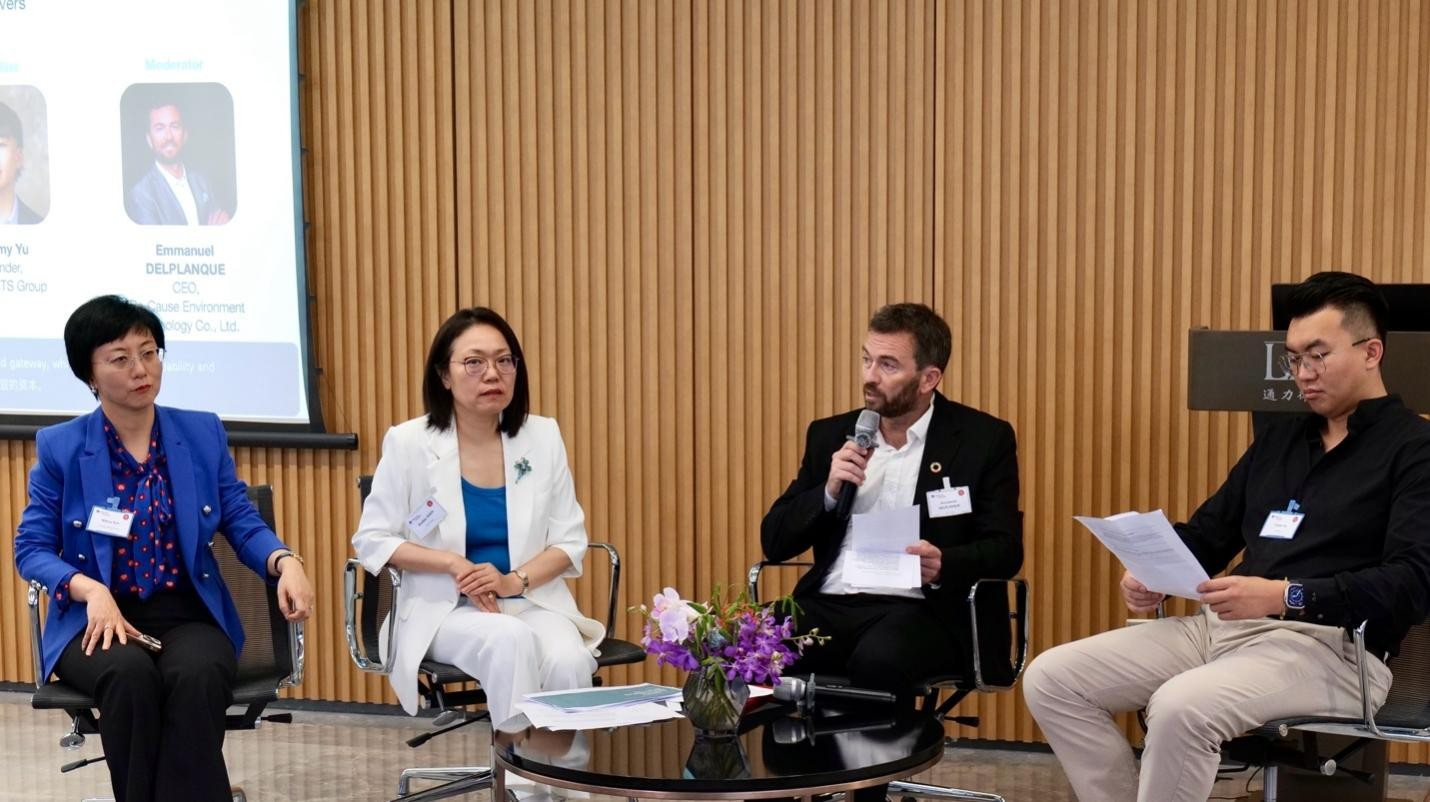
Panel Discussion 1 – Government Incentives and Tax Levers
Key Takeaways from the Speakers
Moderator – Emmanuel DELPLANQUE, CEO, Be-Cause Environment Technology Co., Ltd. and Vice Chair of the BritCham Shanghai Sustainability Committee
Panellist – Nancy Sun, Senior Partner, China Head of Energy Practice, Dacheng Shanghai Office
Panellist – Shelley SHEN, Former Chief Impact Officer of APAC Region & President of APAC WE (Women Empowerment) Community, Saint-Gobain
Panellist – Jeremy Yu, Founder, IN2ORBITS Group
Keynote – Global Market Trends & Sustainable Finance 101
To ensure all attendees—particularly those new to the sector—gained a solid baseline of knowledge, the keynote session opened with an accessible primer on sustainable finance fundamentals. Mingyi Chen demystified the current landscape by first reviewing global market trends, highlighting the robust growth in sustainable bonds, loans, and equity markets where Chinese financial institutions and enterprises currently command a leading global presence. The presentation then contrasted the key financing vehicles, moving past generic definitions. It distinguished between Green Loans, which strictly restrict funds to specific environmental projects, and Sustainability-Linked Loans (SLLs), which adjust financing terms based on verified sustainability performance targets. Mingyi concluded the keynote by highlighting that these sustainable financing mechanisms deliver a wide range of strategic benefits to enterprises, seamlessly leading into the second panel discussion.
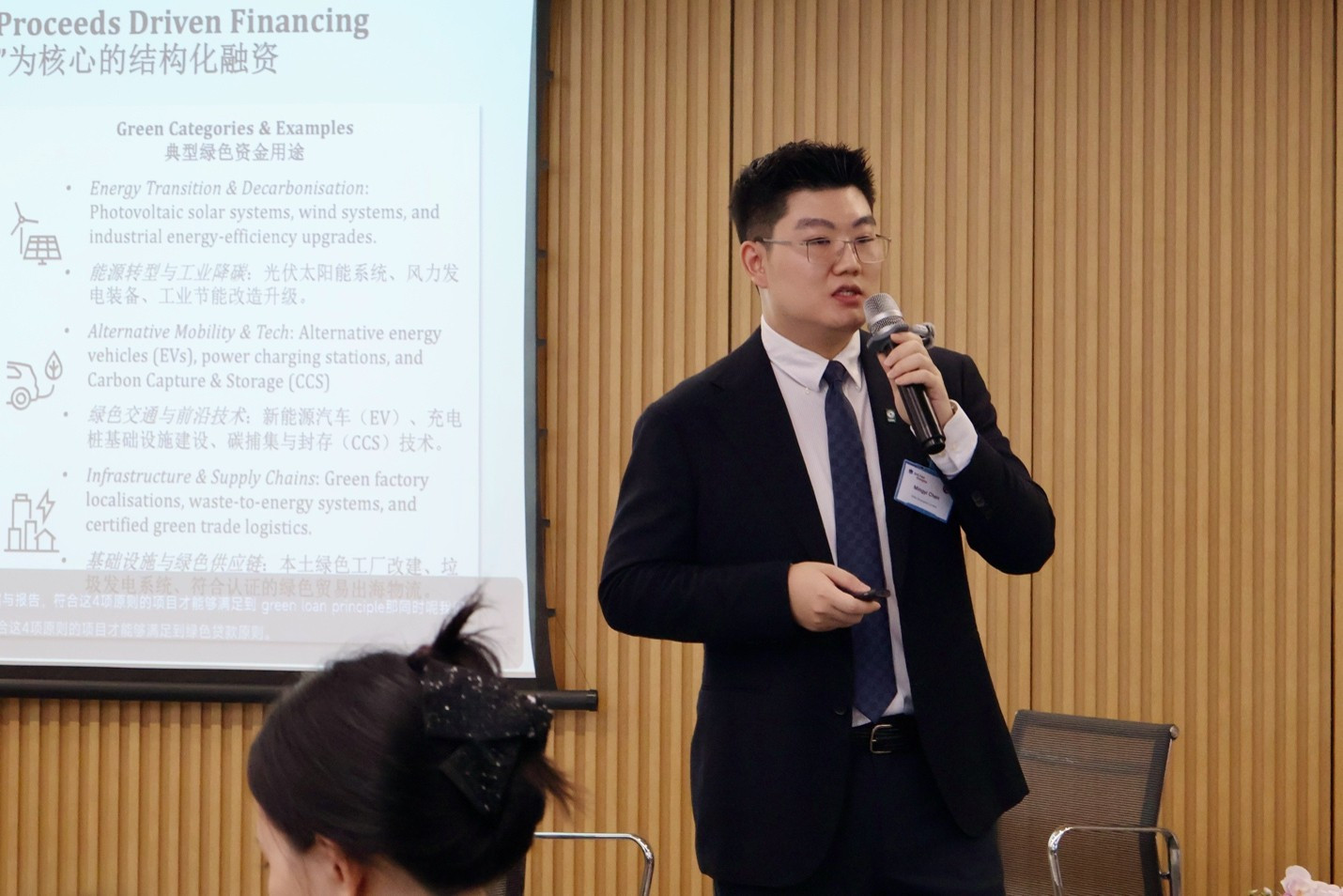
Keynote Speaker – Mingyi Chen, Project Manager & China Compliance Manager, ERM and Vice Chair of the BritCham Shanghai Sustainability Committee
Panel Discussion 2 – Global Horizons & Domestic Pathways in Sustainable Financing
The second panel discussion moderated by Mingyi focused on the practical implementation of sustainable finance, bringing together representatives from international commercial banking, non-bank leasing providers, independent sustainability advisory, and professional accounting bodies to discuss how businesses can successfully access green financing.
The dialogue moved beyond basic compliance to examine how this integrated network is actively reshaping corporate value. Panellists explored the strategic intersection between stringent global capital mandates and pragmatic domestic execution, illustrating how mechanisms like sustainability-linked supply chain incentives, rigorous third-party assurance, and asset-level energy retrofits support both multinational operations and traditional high-carbon sectors. Rather than framing sustainability as a static checklist, the session highlighted how embedding continuous, verified carbon data into corporate governance structurally reduces credit risk and unblocks capital, particularly for SMEs. Ultimately, the panel demonstrated that accelerating China’s sustainable transition relies on translating macro disclosure frameworks into actionable, commercially viable pathways on the ground.
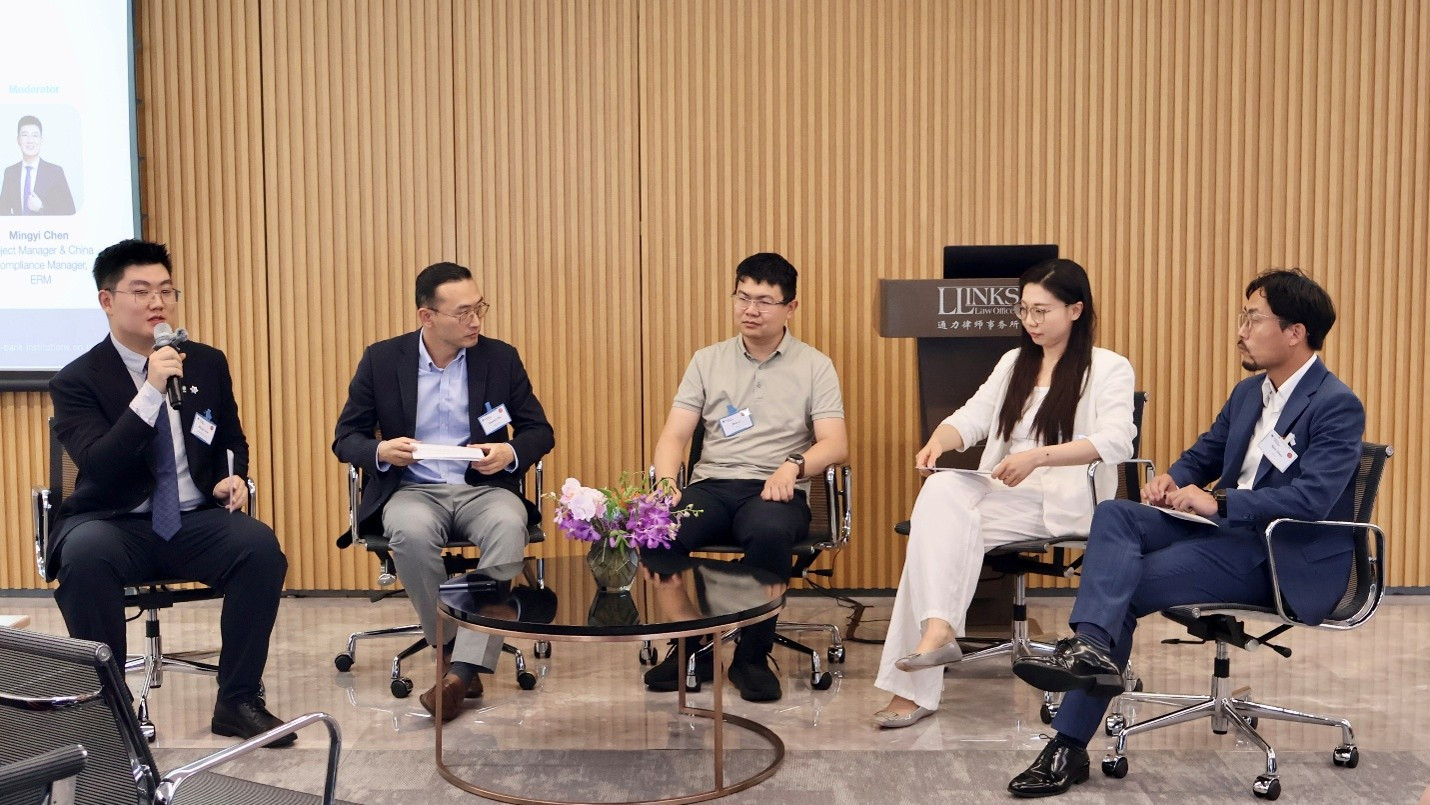
Key Takeaways from the Speakers
Panellist – Chester Zhu, Head of Sustainable Finance & Transition, China Corporate and Institutional Banking, Asia Pacific, HSBC Bank (China) Company Limited
Panellist – Zhao Li, ESG VP, Far East Horizons
Panellist – Joy Yin, Managing Consultant, ERM
Panellist – Sam Chen, Regional Lead Policy & Insight China ACCA
Moderator – Mingyi Chen, Project Manager & China Compliance Manager, ERM and Vice Chair of the BritCham Shanghai Sustainability Committee
BritCham Shanghai remains steadfast in its commitment to empowering business leaders with the knowledge, networks, and strategic foresight needed to navigate the complex and rapidly evolving sustainable finance landscape. Through the dedicated efforts of its Sustainability Committee and a growing portfolio of high-impact events, the Chamber continues to serve as a vital bridge for cross-sector collaboration, bringing together diverse expertise to tackle the most pressing environmental and governance challenges of our time. As China’s green transition accelerates and global sustainability expectations continue to rise, BritCham Shanghai will persist in convening the conversations that matter—helping businesses move from commitment to action, from compliance to leadership, and from short-term adaptation to long-term, sustainable growth.