News Article

News Article

Recap of Sustainable Supply Chains in Practice —Knowledge-Sharing Session and GREENEXT Expo Visit on 29 October

9 Nov 2026

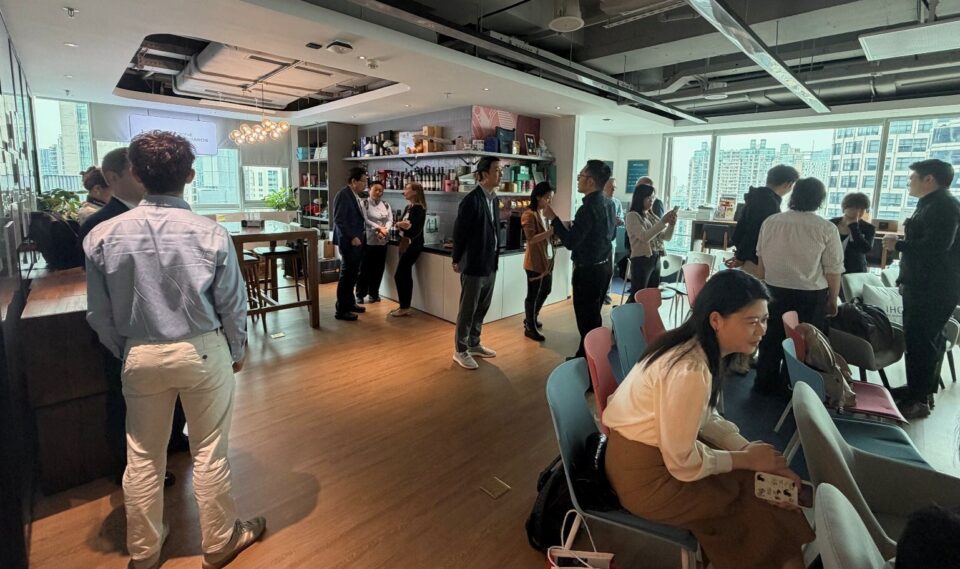
On 29 October 2026, the BritCham Shanghai Sustainability Committee hosted a knowledge-sharing session, “Sustainable Supply Chains in Practice”, at the BritCham office, bringing together senior supply chain, procurement and sustainability leaders to discuss how to turn sustainability commitments into measurable value-chain action. The session was hosted and moderated by Carol Zhang, APAC Sustainability Leader at Edrington and Chair of the BritCham Shanghai Sustainability Committee, and took place on the opening day of GREENEXT Expo / Shanghai International ESG Impact Week.
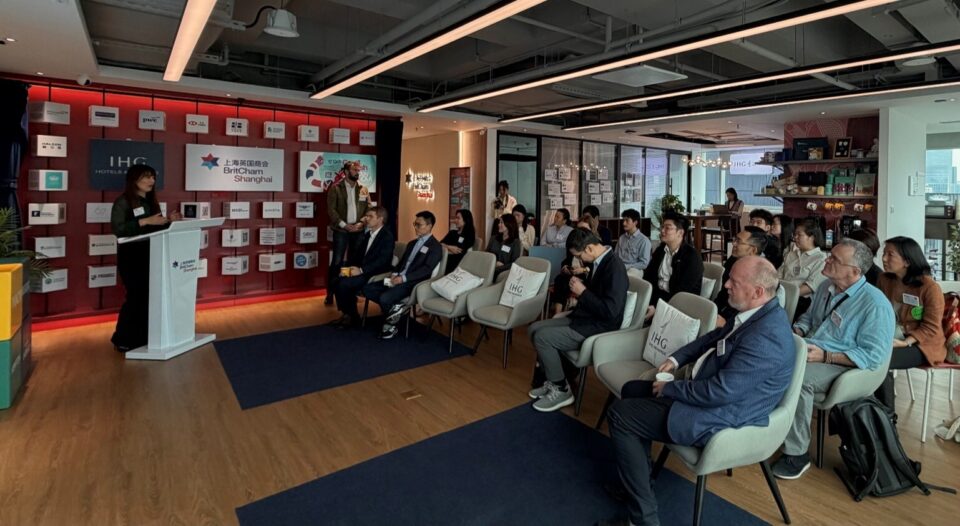
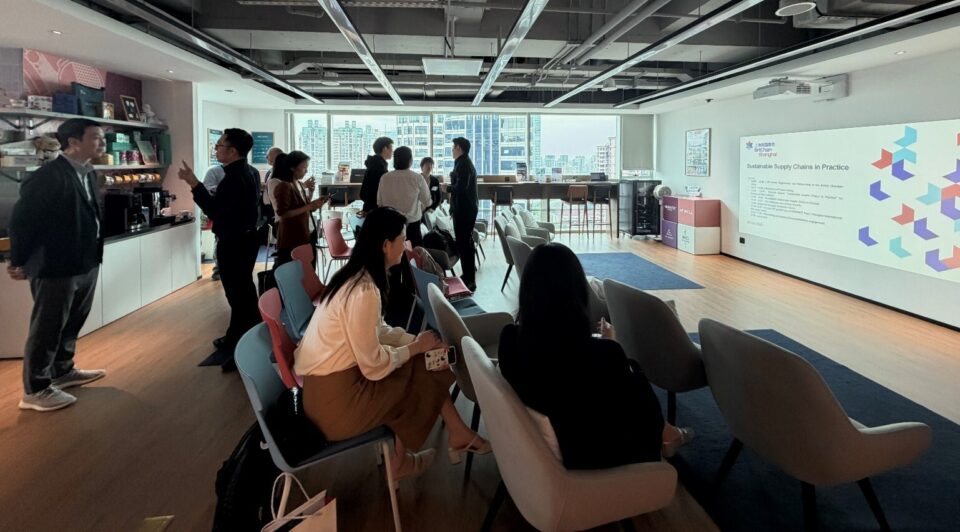
Keynote: Where the Carbon Sits, Where the Lever Is, and How to Act on It

Emmanuel Delplanque, Co-Founder & CEO of Be-Cause Environment Technology Co., Ltd. and Vice-Chair of the BritCham Shanghai Sustainability Committee, argued that when suppliers decarbonise, a company’s footprint should move with them – but with average data it does not. Key points:
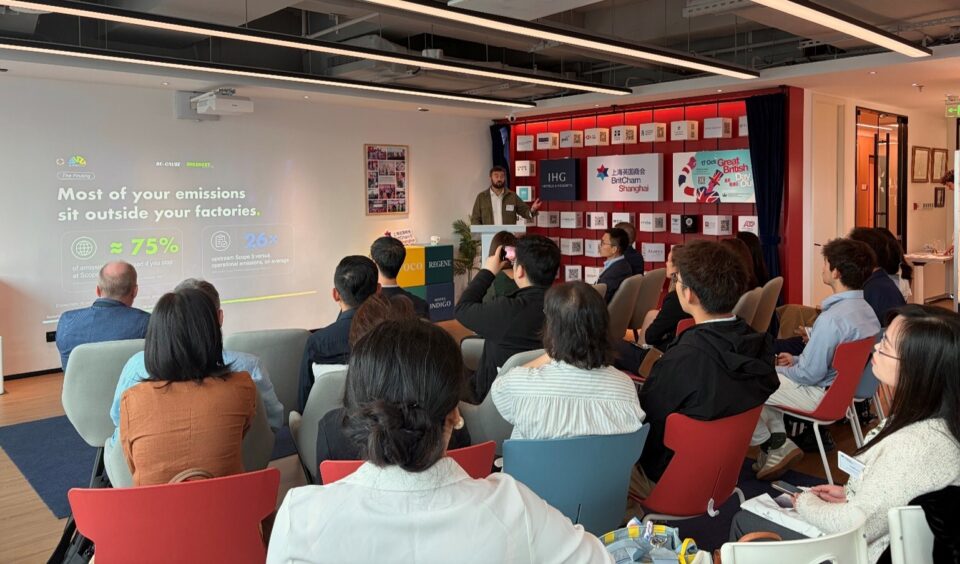
  • Most emissions sit outside your factories: about 75% are missed if a company stops at Scopes 1 and 2, and upstream Scope 3 averages around 26 times operational emissions (exceptions: steel, cement, glass and energy). A supplier’s factory is the buyer’s Scope 3, and the hotspot differs by product – materials dominate for a chocolate bar or jeans, the use phase for a dishwasher (77%).
  • A bottle of spirits: packaging (~32%) and raw materials (~38%) dominate. For glass, 65–70% sits at tier 1, so the lever is the glassmaker’s furnace; for malted barley, 77–87% sits on the farm at tier 2, so the lever is the farm, reached through the maltster.
  • Yesterday’s lever is not tomorrow’s: automotive moved from combustion to EVs but now faces raw-material scarcity; spirits move from furnaces and lighter bottles to climate adaptation and fertiliser use. Each cycle, the data must come from further upstream.
  • The trap of averages: spend- or activity-based estimates make a supplier’s effort invisible, whereas supplier-specific data lets every tonne avoided show up in the buyer’s numbers – a direction reinforced by SBTi’s Net-Zero Standard V2 from February 2027.
  • Screen, Develop, Prove: screen the whole supplier panel (in the example shown, 80%+ of the footprint sat with about 50% of suppliers), develop the ~10% of priority suppliers, and verify results on site for ~1%.

Roundtable: Turning Sustainability Commitments into Measurable Value-Chain Action

Moderated by Carol Zhang, the roundtable opened with participant introductions across packaging, building materials, real estate, waste management, consulting, green finance and academia. Three guests framed the discussion as three tests: Ludovic Hatat (李伟), COO, Altyor China (design); Johnson Gui, CEO, HiQLCD (data); and Andy Lee, Head of Sales Greater China, Interface (demand).
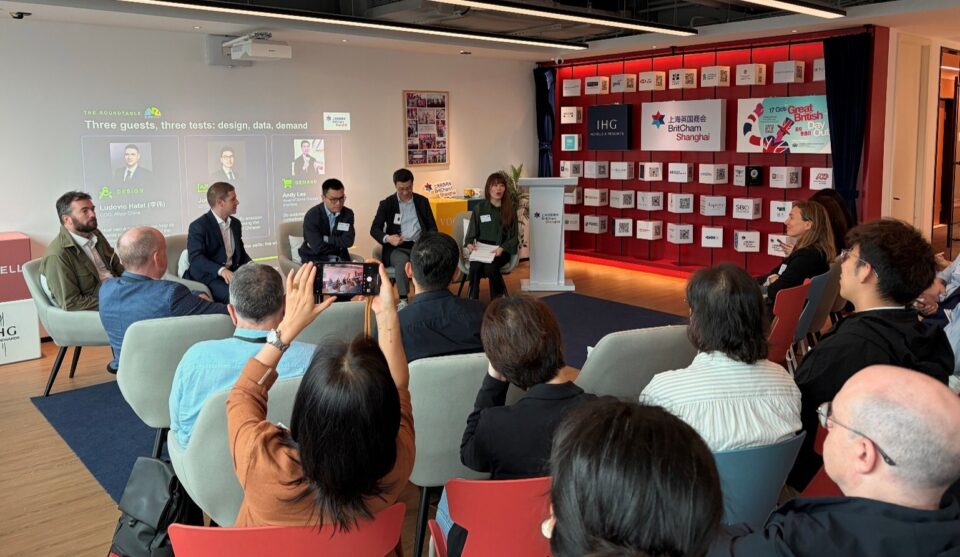
  • Hotspots differ by industry and product: guests called for a common language alongside respect for sector-specific rules. Mr Gui noted that China’s emissions trading scheme focuses on Scopes 1 and 2, which can push emissions upstream to suppliers; a Scope 3 view helps avoid this. Mr Hatat noted that for energy-using products the use phase depends on how customers actually use them, so hotspots must be assessed from the start of design.
  • Design: manufacturers described three directions – reduce emissions from the outset, extend product life, and close the loop through take-back and recycling. Take-back is hard in practice, however: on construction and fit-out projects the general contractor typically clears the site, so used products often still end up as waste.
  • Data: an emission factor is a data set, not a single number – its technology, region, year and methodology matter. China accounts for about 40% of physical manufacturing but only 4–5% of global carbon footprint data sets, so companies have relied on foreign proxies. Once a company genuinely wants to decarbonise, accurate and transparent China-specific data becomes essential; HiQLCD builds it with industry associations and helped set up China’s first official EPD platform.
  • Demand: sector leaders drive demand, treating supply-chain sustainability as a long-term strategy rather than only compliance, while more smaller companies are now joining. Certification and labels help raise awareness but can become box-ticking if over-emphasised; regulation was seen as the stronger driver.

Key Takeaways

  • Find where the carbon actually sits: most emissions are outside your own factories, and hotspots vary by industry and product.
  • Prioritise suppliers – screen the whole panel, develop the few that matter, and verify results.
  • Transparent, China-specific and ultimately supplier-specific data is the foundation; averages hide supplier effort.
  • Design, data and demand must connect – the one who designs, the one who measures and the one who sells need to be at the same table.

Closing Remarks and GREENEXT Expo Visit

Carol Zhang thanked Mr Delplanque, the roundtable guests and all participants for their active contributions. After the knowledge-sharing session, guests went to GREENEXT Expo at the Shanghai Exhibition Centre for a guided tour, and finished with networking at the Edrington booth.
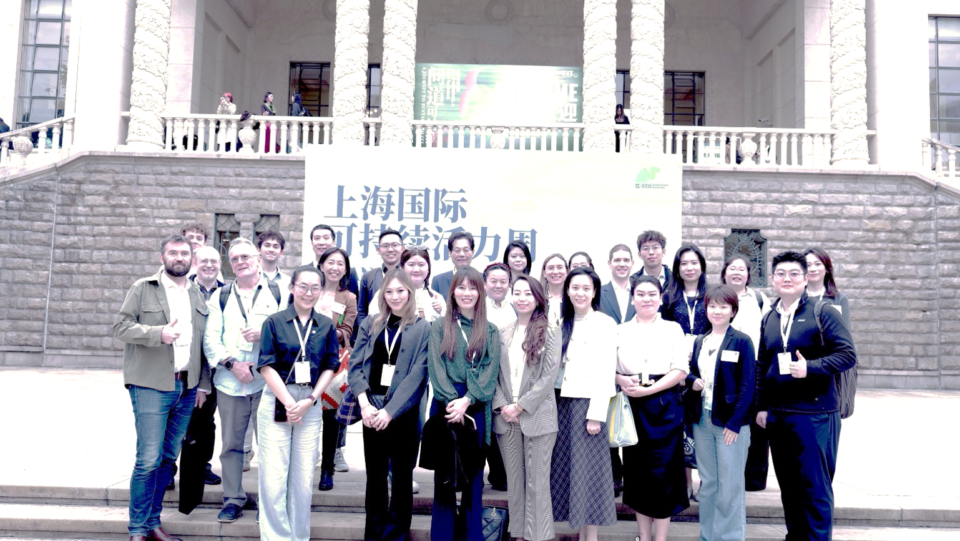
The BritCham Sustainability Committee will continue to bring together business leaders, experts and partners through practical, cross-industry events that turn sustainability ambitions into action. BritCham Shanghai thanks all speakers, guests and attendees for their time and contributions.



Platinum & Associate Platinum Members

Join us

BritCham Shanghai is an organisation proudly run by its members — for its members. Whether your business is based in China or overseas, we welcome you to be part of our community. Let's connect, and become a member today.